
Last updated September 10, 2026
Full 25-point door and opener safety check with every visit - springs, cables, rollers, tracks, and your LiftMaster or Chamberlain opener included
You get a price before we start. It does not change when the truck arrives.
 Before
 After
After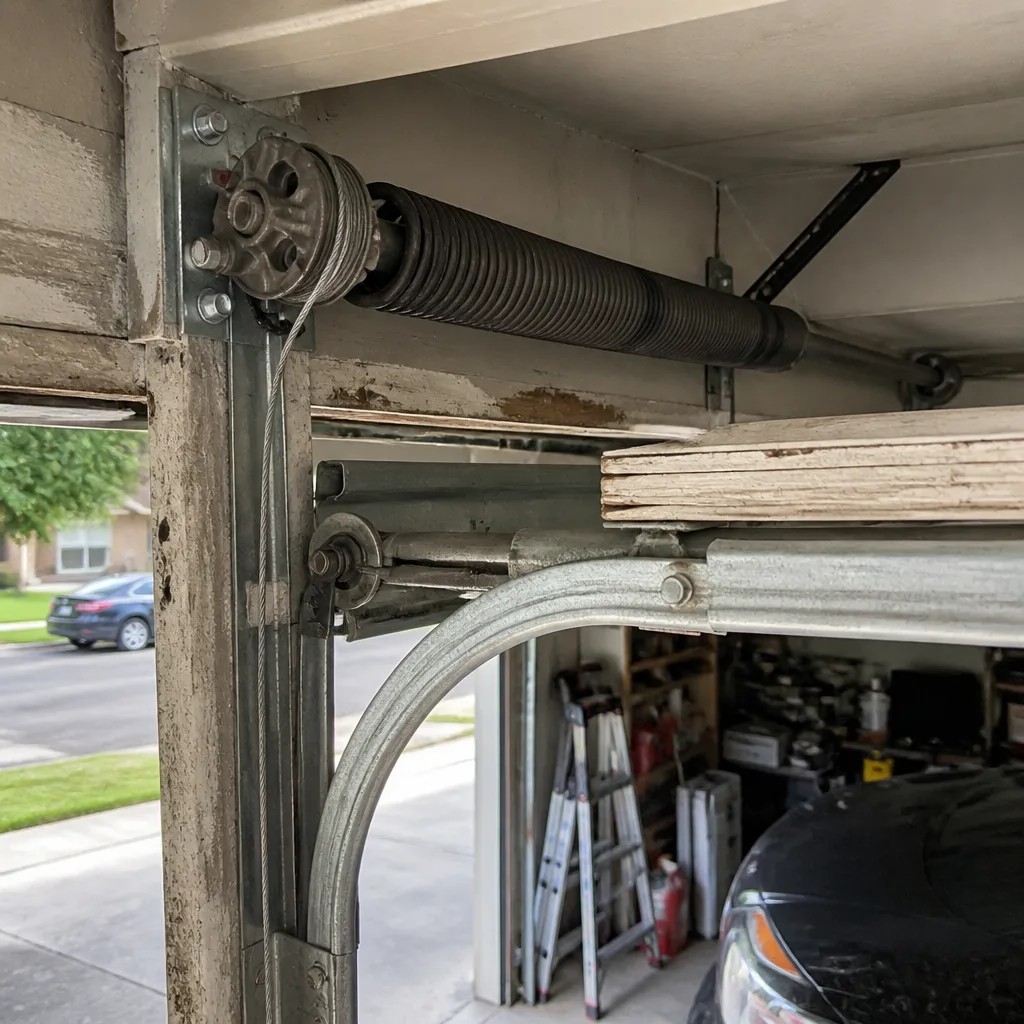 Before
 After
After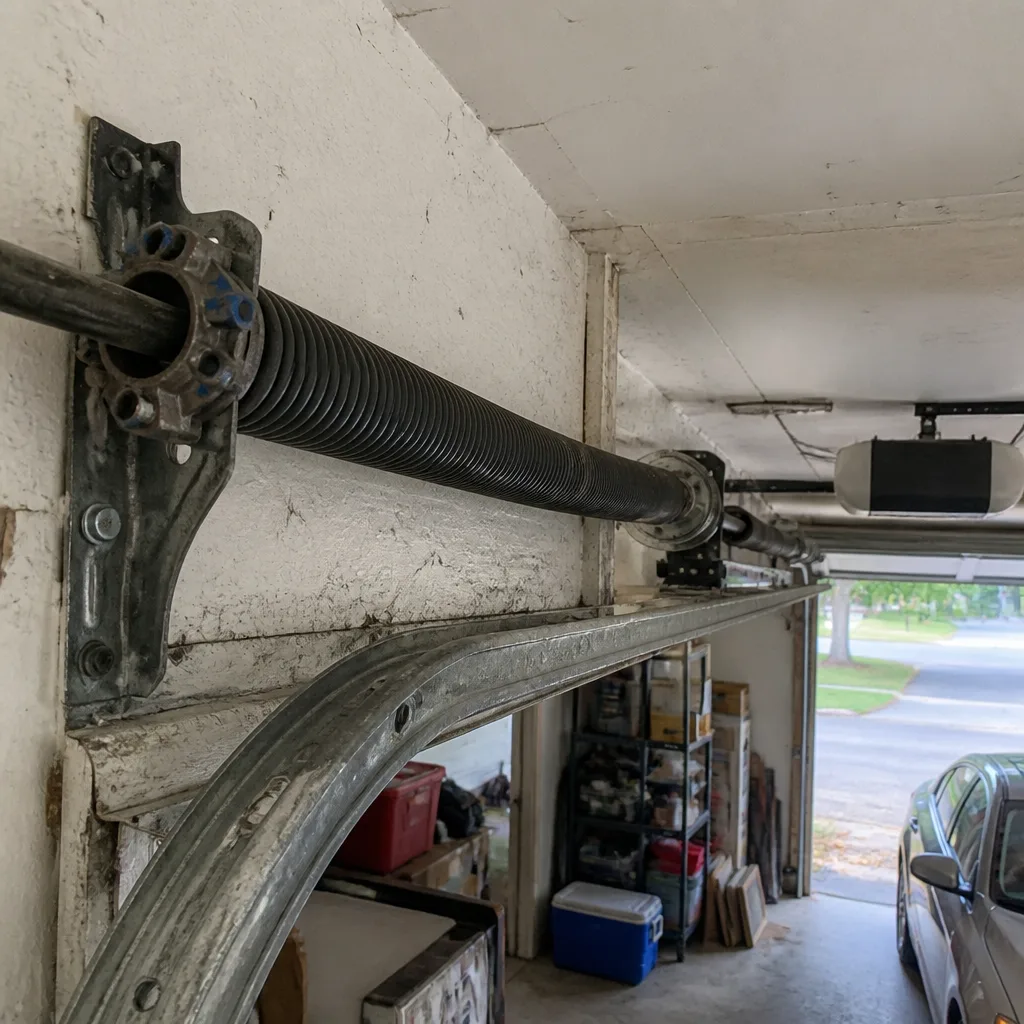 Before
 After
AfterGarage Door Warning Signs: A Plano Homeowner’s Reference Guide
The loudest garage doors in Plano are not always the most dangerous ones. The door that opens quietly but slightly crooked is often the one that drops without warning. Most homeowners wait for the catastrophic failure: the spring that snaps at 6:40 a.m. with the car trapped inside, or the cable that frays through and sends 200 pounds of steel lurching sideways. But a garage door telegraphs its decline for weeks beforehand, and once you know what to look for, you can fix a $200 cable before it becomes a $900 door-off-its-tracks repair. This guide walks you through the actual warning signs we see in Plano garages every week, what each one means, and which ones demand immediate attention. For a deeper look at everything from choosing a door to long-term maintenance, see The Complete Guide to Garage Door in Plano.
Quick Answer
The most common garage door warning signs in Plano homes are a door that opens slightly crooked, a grinding or popping sound during operation, a door that moves slower than it did a year ago, visible fraying on the cables, and a door that reverses for no apparent reason. Any of these means a component is wearing out and the door is working against itself, which accelerates the damage. If you notice a door out of level or a cable starting to fray, stop using the door and call a professional the same day.
Table of Contents
- The Visual Test: What to Look For Without Touching Anything
- Sound Diagnosis: What Your Door Is Telling You
- The Slow-Door Test: Measuring Performance Before It Fails
- Why a Reversing Door Is Sometimes a Sensor Problem and Sometimes a Spring Problem
- What Plano Climate and Soil Do to Garage Doors
- The Honest Triage: Schedule It vs. Stop Using It Today
- Common Mistakes to Avoid
- When to Call a Professional
- Frequently Asked Questions
- The Bottom Line
The Visual Test: What to Look For Without Touching Anything
You do not need to be a garage door technician to run a meaningful diagnostic. You need eyes and about ninety seconds. Stand in the driveway with the door closed and work through this checklist. The goal is to catch asymmetry, because a door that is not perfectly level is a door that is actively damaging itself.
- Look at the gap between the door and the ground. On a closed door, the bottom seal should touch the floor evenly from left to right. If you see daylight under one corner, the door is out of level. That means one side of the system is carrying more weight than the other, which wears cables, hinges, and rollers unevenly.
- Sight down each vertical track. The track should be a straight, vertical line. If one track has a visible bow, a kink, or a section that flares outward, that track is compromised. A bent track does not just look wrong. It creates a pinch point where rollers bind, and a bound roller is what tears a door off its tracks.
- Check the cables. On each side of the door, there is a steel cable that runs from the bottom roller bracket up to the drum at the top of the shaft. Look for any strand that is lifting away from the cable body, any rust, or any section that looks thinner than the rest. A cable with a single broken strand is a cable that is days or weeks from failing completely.
- Look at the rollers. If you have nylon rollers, check for cracks or flattened spots. If you have steel rollers, check for rust and wear on the stem. A roller that is no longer round is a roller that is dragging, and a dragging roller makes the opener work harder than it should.
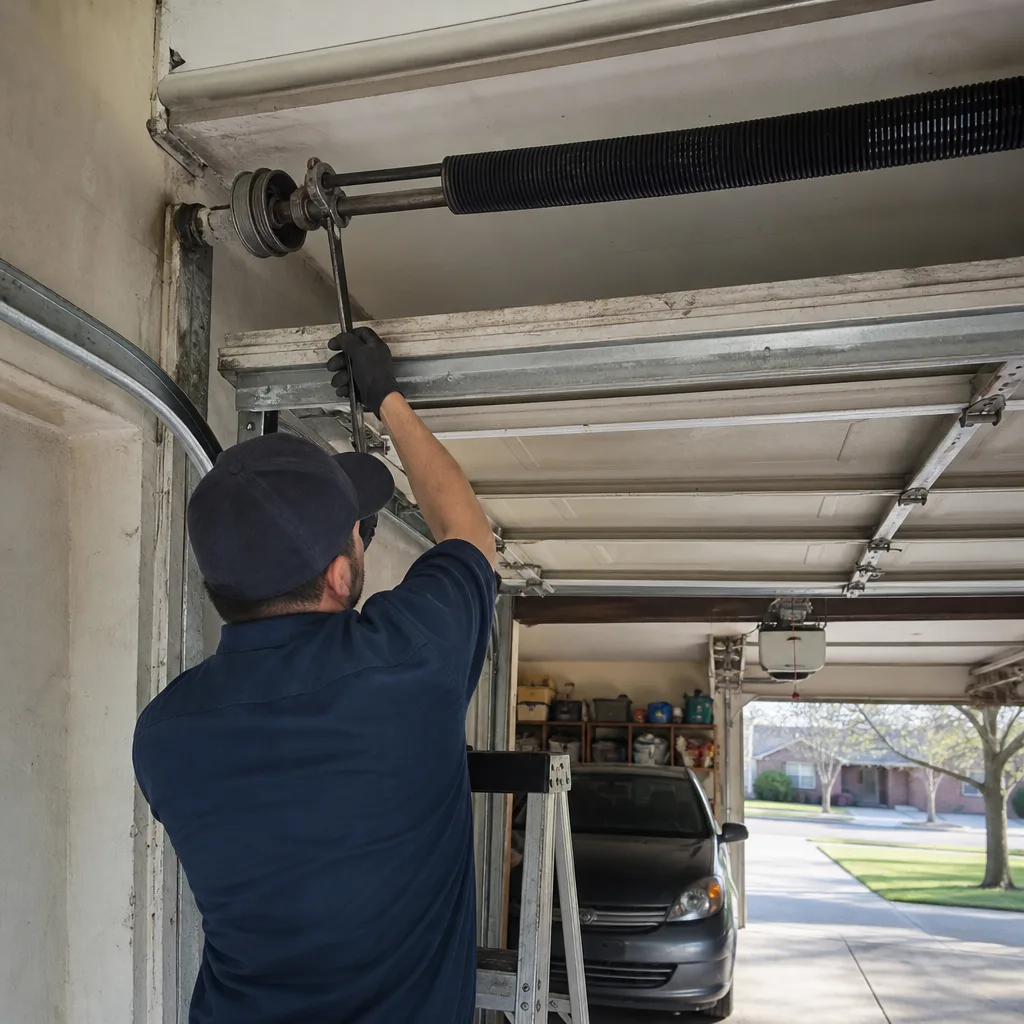
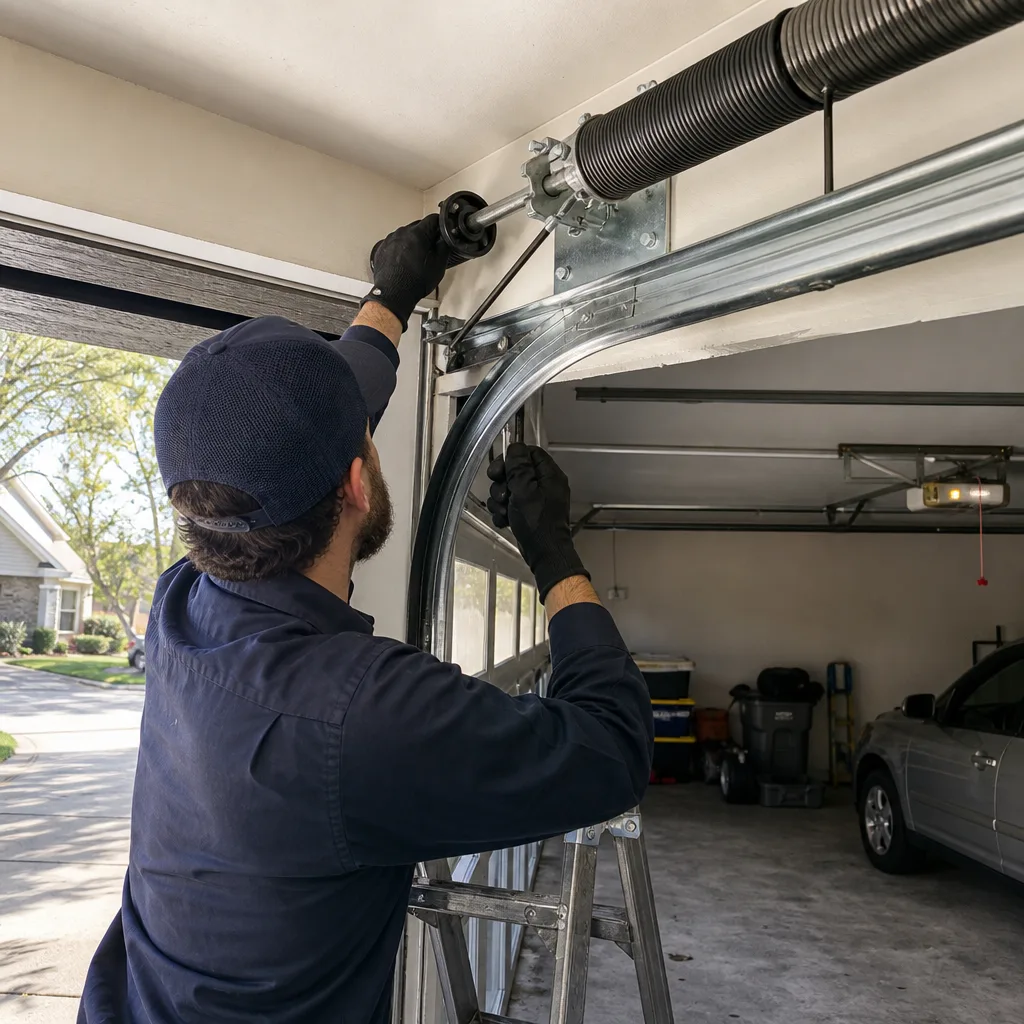
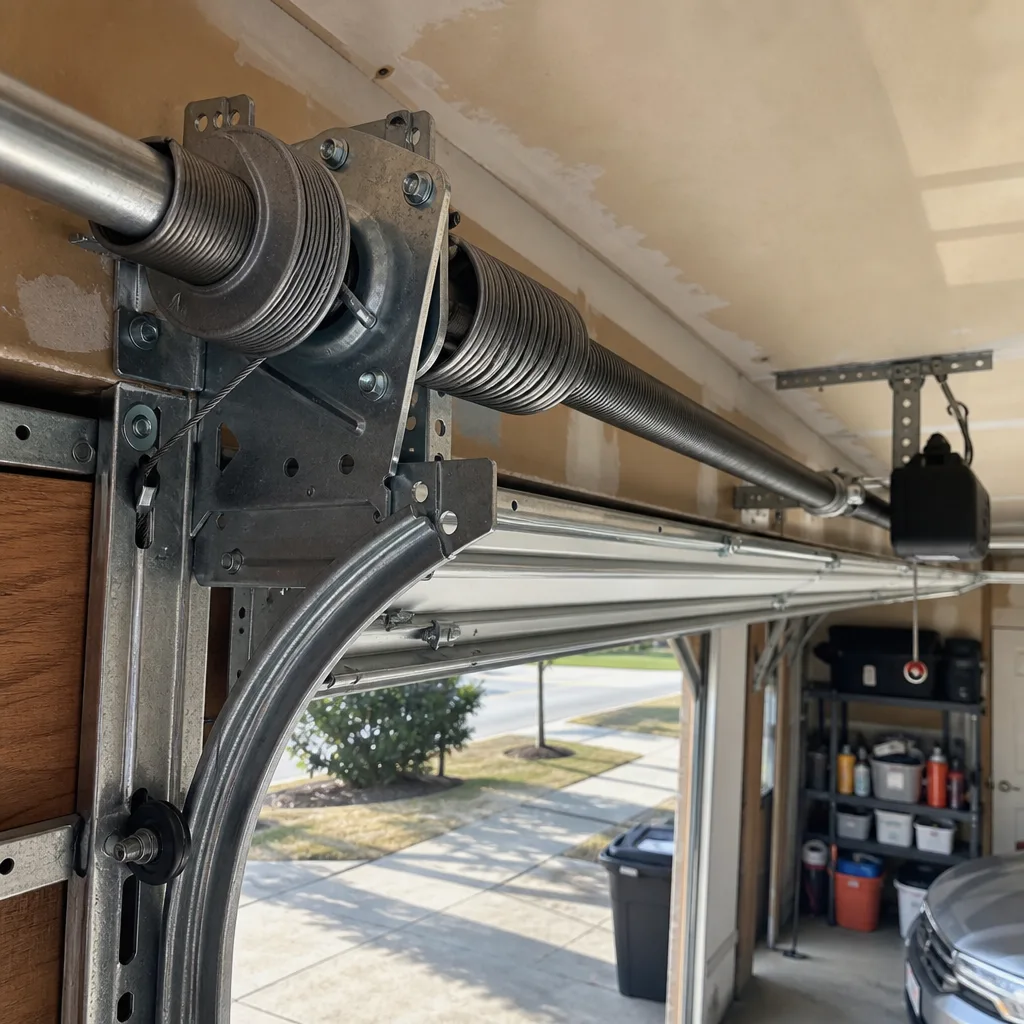
- Study the spring assembly. Without touching anything, look at the springs. On a torsion system above the door, check whether the two springs look identical. If one has a visible gap in the coil or sits at a slightly different angle, that spring has already fractured or is about to. On an extension system on the sides, check whether both springs stretch evenly when the door is open.
In Plano, we see a lot of doors where the visual test fails on the right side of the door. That is not a coincidence. Most homeowners park on the left side of a two-car garage and enter and exit through the left bay, which means the right side of the door does more cycles of full open and close. It wears faster. When you run the visual test, pay extra attention to the side you use less often.
If your visual test turns up an out-of-level door or a frayed cable, that is a stop-using-the-door situation. Garage Door Repair in Plano is what we do every day, and a cable replacement is a fraction of the cost of a door that has jumped its track. Call before you run the door again.
Sound Diagnosis: What Your Door Is Telling You
Most Plano homeowners describe the same handful of noises when a garage door is failing, and each sound maps to a specific component. Here is what you are actually hearing.
- Grinding or growling: This is almost always the rollers. The ball bearings inside a roller wear out, the roller stops spinning, and the roller then slides along the track instead of rolling. Metal-on-metal grinding is the sound of a roller being ground flat. Left alone, it wears a groove into the track, and that track becomes a replacement instead of a roller. Sometimes a grinding sound is the opener’s gear and sprocket assembly, particularly on older Genie and LiftMaster units, but rollers are the first thing to check.
- Popping or snapping when the door moves: A single sharp pop when the door starts to move is a classic sign of a spring beginning to fail. Torsion springs are under enormous tension, and when a coil begins to slip or a spring starts to fatigue, it can produce a sharp metallic pop. If you hear a pop and the door still works, treat that as the spring announcing its retirement. It may have days left, not months.
- Slapping or banging from the middle of the door: A horizontal section slapping against the one below it is usually a hinge problem. The hinge plates wear, the pin loosens, and the sections start to articulate independently instead of as one panel. This is most visible on doors from Clopay or Amarr that have been in service for fifteen years or more. The fix is new hinges, but if you wait, the movement will crack the door section itself.
- Squealing that changes pitch as the door moves: A high squeal that shifts as the door travels is the sound of a roller stem dragging inside a worn hinge tube. It is less urgent than grinding, but it means the roller is not properly seated, and it will chew through the hinge.
- A rhythmic thumping as the door goes up: If the door moves up but you hear a thump-thump-thump like a washing machine out of balance, one of the rollers is flat-spotted or the drum is winding unevenly. An unevenly wound drum is a spring-system problem, and it puts asymmetric load on the cables, which shortens their life.
Here is the practical rule: grinding and squealing are schedule-it-this-month sounds. Popping and thumping are call-today sounds. In our experience in Plano, the popping sound gets ignored more than any other warning sign, and it is the one that ends in the driveway-blocking spring failure the most often.
The Slow-Door Test: Measuring Performance Before It Fails
A garage door opener has a rated speed, and your door should travel the full opening height in roughly the same time it took when the opener was new. Most residential openers move a door at about 7 to 8 inches per second, meaning a standard 7-foot door should take 10 to 12 seconds to fully open. If your door is taking noticeably longer, something is adding resistance, and the door is telling you about it.
Run the slow-door test once every few months:
- Stand in the garage with the door closed and a timer on your phone.
- Press the opener and start the timer at the same moment.
- Time the door from fully closed to fully open.
- Repeat for the close cycle.
A door that takes 12 seconds today and took 12 seconds a year ago is fine. A door that has crept from 12 seconds to 16 or 18 seconds is a door with a growing problem. The most common cause of a slowing door is a spring that is losing tension. Torsion springs are rated for a specific number of cycles, typically 10,000 on a standard spring, and as they approach the end of that life they do not fail cleanly: they lose force gradually. The opener compensates by working harder, which shortens opener life. I count spring cycles the way you count tire miles, and a spring that has been on a Plano door for 10 or 12 years is a spring that is near the end, even if it has not snapped yet.
The second most common cause of a slowing door is friction from unmaintained parts. Rollers that have never been lubricated, hinges that are packed with dust and pollen, a track that has collected years of Plano clay dust: all of these add drag. This is where a slow door is actually a helpful warning, because lubrication and roller replacement are cheap compared to a new opener motor.
But if the door is slowing and the rollers and hinges are in good shape, do not assume the opener is failing. The opener is the muscle; the spring is the counterweight. If the spring is weak, the muscle strains. Replacing the opener without addressing the spring solves nothing. If the opener is straining, the problem is almost never the opener.
Why a Reversing Door Is Sometimes a Sensor Problem and Sometimes a Spring Problem
Since 1993, every residential garage door opener sold in the United States has been required to include a safety reversing mechanism, usually a pair of photo-eye sensors mounted about six inches off the floor on each side of the door opening. When the beam between those sensors is interrupted, the opener reverses or refuses to close. In Plano, where dust, leaves, and spider webs are a constant, the sensors get dirty or knocked out of alignment, and the door reverses for no reason the homeowner can see.
This is the classic sensor problem, and it is simple to diagnose. Look at the sensors. Each one has a small light. On most newer Genie and LiftMaster units, one sensor has a green light and one has an amber light. If the green light is off or blinking, the sensors are not aligned, or something is blocking the beam. Clean the lens with a dry cloth, check that both sensors are pointed directly at each other, and clear any cobwebs, boxes, or yard tools from the beam path. If the door still reverses, the sensor itself may be failing.
But here is the part most guides skip. A spring that is losing tension also causes a door to reverse, and the mechanism is completely different. When a spring weakens, the door becomes heavier to the opener than it should be. The opener’s force-sensing circuit, designed to reverse when it detects an obstruction, interprets the extra load as something in the way. The door starts to close, the opener detects resistance that should not be there, and it reverses. The homeowner blames the sensors, cleans them, realigns them, and the door still misbehaves, because the problem was never the sensors.
Here is how to tell the difference. A sensor problem happens on the way down, usually with the door stopping and reversing after moving only a few inches. A spring problem can happen at any point in the cycle, and it is often accompanied by other signs: a door that is harder to lift manually, a door that looks slightly uneven when it is halfway up, or a popping sound when the door starts to move. If you disconnect the opener (pull the red release handle) and try to lift the door by hand, a door with a healthy spring should be liftable with one hand and should stay put at the halfway point when you let go. A door that feels heavy or drops when you let go is a spring problem, not a sensor problem. This manual lift test takes thirty seconds and tells you more than an hour of sensor troubleshooting.
One more note: garage door opener force settings exist for a reason. Techs sometimes crank the force dial up to compensate for a weakening spring, which silences the reversing symptom but destroys the safety system. A door that has been force-adjusted to mask a spring problem is a door that can close on a child or a pet. Never adjust force settings as a fix. Fix the spring.
What Plano Climate and Soil Do to Garage Doors
Plano has a specific set of environmental stresses that show up in garage door failures, and knowing them helps you understand why your door behaves the way it does. Homeowners who moved here from other regions often assume garage doors fail the same way everywhere. They do not.
First, the soil. Large portions of Plano are built on expansive clay soil, the same Blackland Prairie clay that cracks home foundations across North Texas. That soil swells when wet and shrinks when dry, and over the course of a decade, it can shift a garage slab enough to move the door opening out of square. When the opening is no longer square, the tracks are no longer parallel to the door, and the door begins to bind. This is why we sometimes see doors in older Plano neighborhoods such as Willow Bend or Old Towne Plano that bind even after new rollers, because the slab has moved and the track needs to be re-shimmed to match the garage as it actually sits, not as it was built in 1998.
Second, the heat. A Plano garage can reach 120 degrees in August, and that heat accelerates the aging of torsion springs and the plastic parts inside the opener. Springs fatigue faster in sustained heat. The grease inside rollers and hinges breaks down faster. The plastic gears inside opener drive units, particularly on older Chamberlain and Craftsman units, become brittle and strip. A garage door in Plano that is ten years old has aged more than a garage door of the same age in a northern climate.
Third, the dust and the storms. The same fine clay dust that coats your car also works its way into roller bearings and hinge pins, acting as an abrasive. After a spring thunderstorm, we get calls from Plano homeowners whose openers have stopped working, and the usual cause is a power surge that took out the logic board. A surge protector on the opener outlet is the cheapest garage door insurance you can buy in this climate.
Understanding these local stresses matters because it changes the maintenance math. Plano homeowners should lubricate their doors more often than the national average guidelines suggest, and they should expect spring life on the shorter end of the manufacturer’s range. If your door is 12 years old in Plano and you have never replaced the springs, you are driving on borrowed time no matter how well the door still works.
The Honest Triage: Schedule It vs. Stop Using It Today
One of the most useful things a Plano homeowner can do is put every warning sign into one of two buckets. Some problems can wait a week or two for a scheduled appointment. Others are a genuine hazard, and using the door in the meantime risks injury or a much more expensive repair. Here is the triage, honest and specific.
Schedule it this month:
- A door that is slightly noisy but still level and still travels at normal speed. Squealing rollers, a little grinding, a hinge that slaps occasionally.
- A door that is a couple of seconds slower than it used to be but still opens smoothly.
- A sensor that needs occasional realignment or cleaning.
- Rusty hardware, worn weatherstripping, a door that is cosmetically tired but mechanically sound.
- An opener that works but is noisy, particularly the older screw-drive units that develop a rattle.
Stop using the door today:
- A door that opens visibly crooked, even by half an inch. This means one cable is carrying more load than the other, and the overloaded cable is the one that snaps.
- Any visible fraying, rusting through, or strand separation on either cable. A cable with one broken strand is a cable in its final days.
- A spring with a visible gap in the coil. That spring has already failed; the second spring is now carrying the entire load and will fail soon.
- A door that shudders or jerks as it moves, particularly if it jumps or lurches. A door that jumps is a door whose parts are no longer under control.
- A door that has already come off its tracks or a roller that has popped out of the track. Do not attempt to run the door at all.
The dividing line is simple. Warning signs that involve the cables, the springs, or the level of the door are stop-using-today situations, because those are the components under tension, and when they fail, they fail with force. A door is 200 pounds riding on two springs. Respect it. Warning signs that involve the rollers, hinges, or opener are schedule-it situations, because those components fail gradually and rarely cause a catastrophic event.
If you are not sure which bucket your door falls into, call and describe what you are seeing. A live person answers at Otto’s Garage Door home, and we will help you make the call over the phone without a service charge.
Common Mistakes to Avoid
- Lubricating the wrong parts. Homeowners spray WD-40 on the tracks and call it maintenance. The tracks do not need lubricant; they need to be clean. The parts that need lubrication are the roller bearings, the hinge pins, and the torsion spring. Lubricating the track just collects Plano dust and makes a grinding paste.
- Adjusting the opener force to fix a reversing door. A door that reverses because of a weak spring will respond to a higher force setting, but that setting removes the safety margin that protects your family. You have not fixed anything; you have disabled the safety system.
- Replacing the opener when the spring is the problem. A weak spring makes the opener work harder, and the opener eventually burns out. But if you replace the opener and leave the weak spring, the new opener will burn out too. Fix the spring first, then evaluate the opener.
- Ignoring a small rust spot on a cable. A cable that is rusting is losing strength at that point, and that is exactly where it will snap. Surface rust on a fifteen-year-old cable is not a cosmetic issue; it is a countdown.
- Running a door that has jumped partially off its tracks. Homeowners sometimes try to “wiggle it back on” or use the opener to force it. A door off its tracks has live spring tension pulling against a door that is no longer supported. A forced attempt can drop the door or launch a cable. Cut the power and call someone.
- Assuming a new door means a new track is optional. If the track is bent or the slab has moved, putting a new door on old track or old track mounts simply transfers the problem to the new door. In Plano, where slab movement is common, the track and the mounting need to be evaluated whenever the door is replaced.
When to Call a Professional
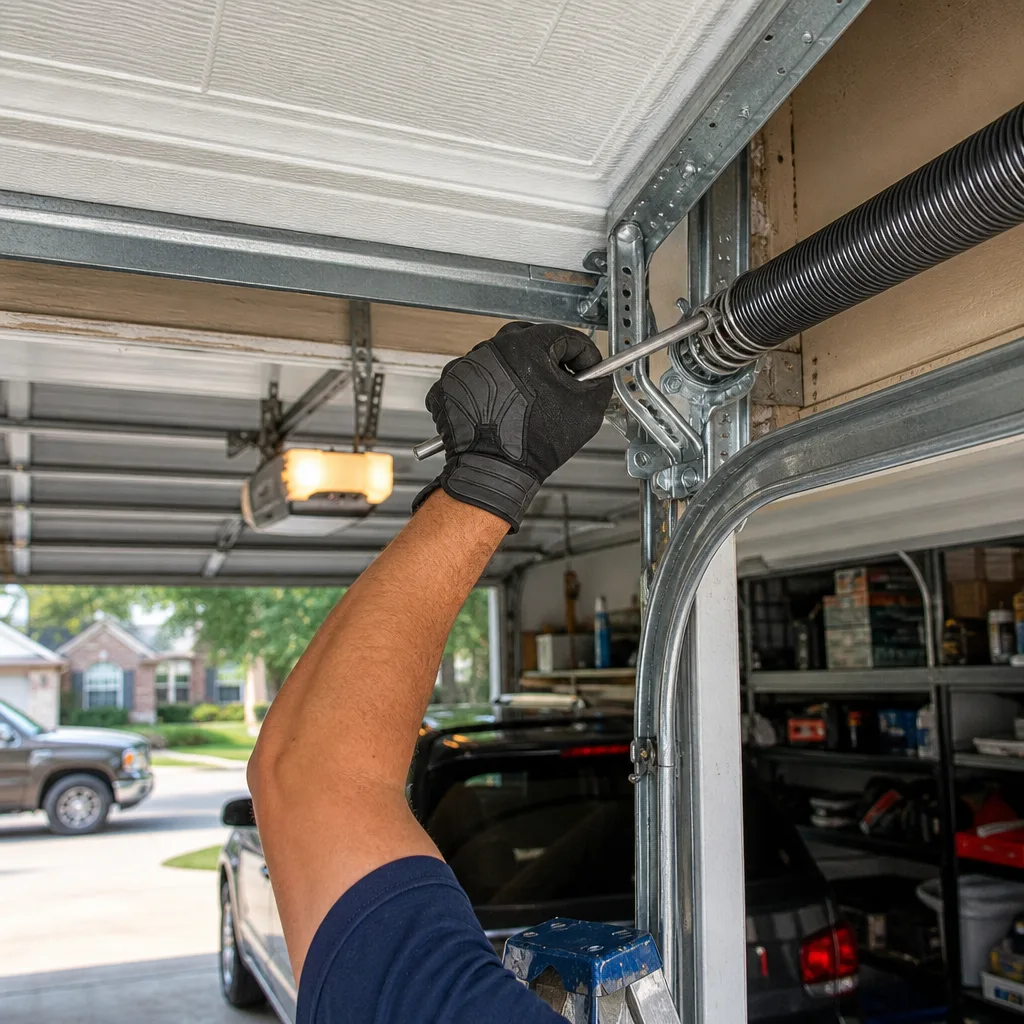
Any time the problem involves the springs, the cables, or a door that is out of level, the right call is a professional. These are the components under tension, and a garage door spring stores enough energy to break bones or worse. Even with the door fully open and the spring relaxed, the process of unwinding a torsion spring without the proper winding bars is genuinely dangerous. This is not a DIY-friendly repair, and the tools alone cost more than the service call.
Beyond the safety concern, there is a money issue. A professional who works on garage doors every day can spot the related problems that a homeowner will miss: the hinge that is about to fail, the bearing that is howling, the track that is drifting out of alignment. Catching those while the door is already apart is cheaper than a second repair visit. Otto’s Garage Door offers free estimates in Plano, call (945) 215-6820 and we will come out, look at the door, and give you a written price before any work starts. We have been at this since 2004, and nobody in Plano should have to guess whether their garage door is safe.
For homeowners considering a full replacement rather than another repair, Garage Door Installation in Plano is the page that walks through what a new door costs and what to expect. For issues specific to the opener itself, start with our Garage Door Opener in Plano guide.
Frequently Asked Questions
The most common warning signs are a door that opens slightly crooked, a grinding or popping noise during operation, a door that moves slower than it used to, visible fraying or rust on the cables, and a door that reverses unexpectedly. A crooked door and a frayed cable are the two most urgent, because both indicate a load imbalance that can cause a sudden, forceful failure.
If you see either of those, stop using the door and call us at (945) 215-6820. We will tell you over the phone what you are likely looking at, and the estimate is free.
In Plano, the most common warning-sign repairs run $120 to $200 for a cable replacement, $180 to $340 for a spring replacement, and $90 to $160 for a set of rollers and hinges. If a door has come off its tracks, the repair typically runs $250 to $500 depending on the damage to the track and panels.
Those are the prices for catching the warning sign early. If you wait for the full failure, the bill goes up fast: a door that drops off its tracks can destroy panels, bend tracks, and take out the opener, and that repair can run $800 to $1,200 or more. Call (945) 215-6820 for an exact quote before you run the door again, and the price we quote on the phone is the price on the invoice.
Yes. We answer the phone around the clock, including nine at night when a spring lets go and your vehicle is sealed inside. A live person answers, quotes the job on that call, and holds the number when we arrive. Same-day service is available in Plano and the surrounding county for emergency work on springs, cables, and doors off their tracks.
Call (945) 215-6820 and you will talk to a person, not a queue.
No. We quote the job on the phone, and the price we quote is the price on the invoice, before any work begins. You agree to the number before we touch anything, and our 90-Day Done Right Promise is written on every invoice. If it is not done right, we make it right, and one call to Otto himself is all it takes.
Nobody in Plano should get a phone price and a different driveway price. If a company quotes low on the phone and bills high at the door, that is a business model, not a mistake.
Yes. Our trucks carry springs, cables, rollers, hinges, and the common parts for LiftMaster, Chamberlain, Genie, Clopay, Amarr, Wayne Dalton, and Craftsman doors. If the part exists on your door, we most likely have a replacement on the truck, which means most Plano repairs are completed in a single visit.
For uncommon or custom parts, we will tell you on the phone what the delay will be and give you the price before you commit.
In Plano, a standard 10,000-cycle torsion spring lasts about 7 to 10 years on a door that is used two to four times a day. The sustained heat of a Texas garage shortens spring life compared to cooler climates, and homes where the garage is used as the primary entrance will wear springs faster than homes where the front door is the main entry.
I count spring cycles the way you count tire miles. If your springs are past the 8-year mark in a Plano garage, have them inspected even if the door still works. Replacement on your schedule costs less than replacement on the spring’s schedule.
The Bottom Line
A garage door is a mechanical system with a finite service life, and the Plano climate shortens that life. The door tells you when it is failing: in the way it sounds, the way it moves, the way it sits in the opening. The homeowner’s job is to listen. A grinding roller, a slowing door, a door that is half an inch out of level: these are warnings, not failures, and each one carries a repair bill that is a fraction of the cost of ignoring it. The cable that frays quietly today is the door that drops off its tracks next month. Learn the signals, act early, and you will spend less over the life of the door. If you are seeing any of the warning signs in this guide, call (945) 215-6820. We will come out, look at the door, and give you an honest, written price before any work starts.
Written by Otto Reinhardt, Owner at Otto’s Garage Door, serving Plano since 2004.