
Last updated September 10, 2026
Full 25-point door and opener safety check with every visit - springs, cables, rollers, tracks, and your LiftMaster or Chamberlain opener included
You get a price before we start. It does not change when the truck arrives.
 Before
 After
After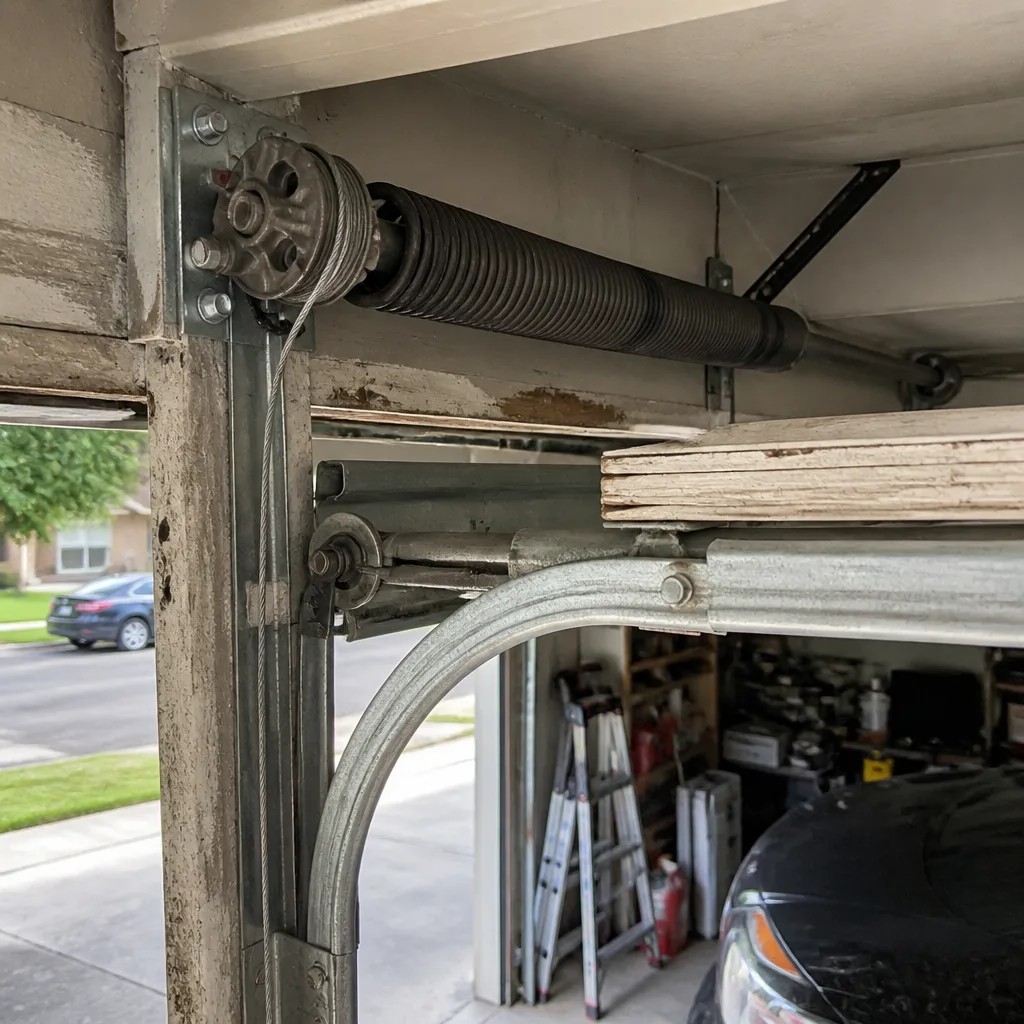 Before
 After
After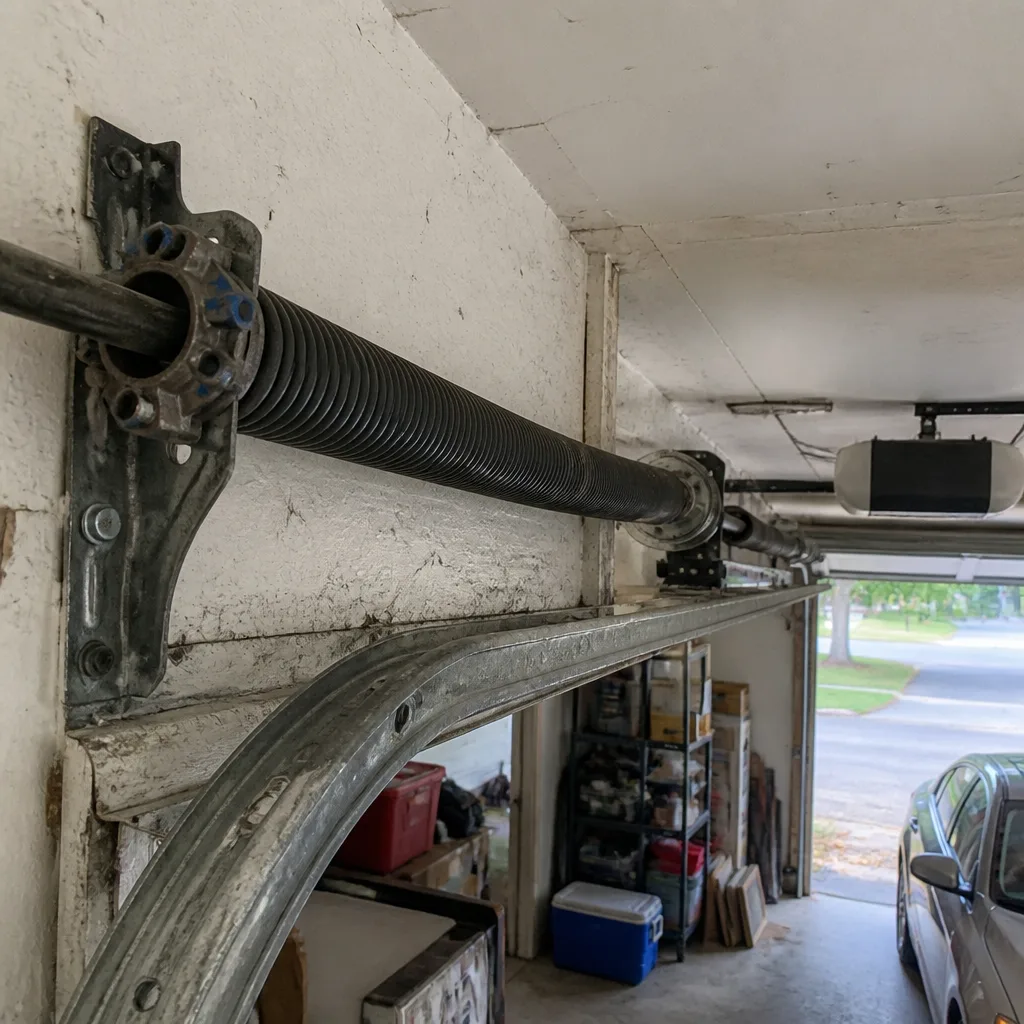 Before
 After
AfterSeasonal Garage Door Care for Plano: Year-Round Homeowner’s Guide
Here’s the thing nobody tells you about garage doors in Plano: we don’t really have four seasons. We have a long, wet spring that comes late, a summer that starts in May and doesn’t quit until October, a fall that lasts about three weeks, and winter events that show up as ice, not snow. Your garage door doesn’t care about the calendar. It cares about heat expansion, metal contraction, humidity, and the one freezing rain night that seizes hardware that’s been dry and worn since August. This guide is built around Plano’s actual weather patterns, not a generic maintenance schedule written for Ohio. For a deeper dive, see The Complete Guide to Garage Door in Plano. By the time you finish reading, you’ll know exactly what to check, when to check it, and when to stop checking and call someone who does this every day.
Quick Answer
Seasonal garage door care in Plano revolves around four unequal windows: a spring inspection in March and April to catch winter damage before heat hides alignment problems, a summer check for heat-weakened torsion springs during May through September, a full lubrication of every moving part in October and November before cold locks things up, and a winter ice-response plan for December through February. The single most important five-minute task year-round is checking the bottom seal, because a cracked seal lets in the moisture, heat, and pests that cause most Plano garage problems. A garage door needs attention at least twice a year, and ignoring seasonal maintenance is what turns a $40 part into a $400 repair.
Table of Contents
- Spring (March-April): The Inspection Window Before Heat Masks Problems
- Summer (May-September): What 100°F Days Do to Torsion Springs
- Fall (October-November): The One Real Lubrication Window in Plano
- Winter (December-February): Handling Ice Events Without Breaking Your Opener
- The Bottom Seal: The Five-Minute Task That Prevents Plano’s Most Common Garage Problem
- Common Mistakes to Avoid
- When to Call a Professional
- Frequently Asked Questions
Spring (March-April): The Inspection Window Before Heat Masks Problems
In Plano, spring is a short window between the last freeze and the first 90-degree day. Some years it lasts six weeks. Some years it lasts two. What matters is this: you want to inspect your garage door before sustained heat causes the metal to expand, because expansion temporarily masks alignment problems. A track that’s slightly out of square in March will still operate because the metal has slack in it. That same track in July, when the rails have widened and the rollers are riding differently, will sound fine. And then November hits, the metal contracts, and suddenly the door binds. We’ve seen this pattern for years. The door didn’t break in November. It broke in March, and the heat hid it.
Here’s what to check every spring in Plano:
- Run the door manually with the opener released. Pull the red emergency release handle and lift the door by hand. It should move smoothly, with resistance only at the very start. If it’s heavy halfway up, the springs are losing tension. If it’s heavy at the bottom, the springs are done.
- Check the track alignment with a level. Place a 4-foot level against each vertical track. Any gap wider than a quarter inch means the track has shifted over the winter or from the previous summer’s heat. Small adjustments are manageable; a track that’s visibly bent needs professional attention.
- Inspect the cables on both sides. Look for fraying near the bottom bracket, where the cable wraps around the drum. Frayed strands mean the cable is days or weeks from snapping. Do not touch or adjust cables yourself. A snapped cable under tension is dangerous.
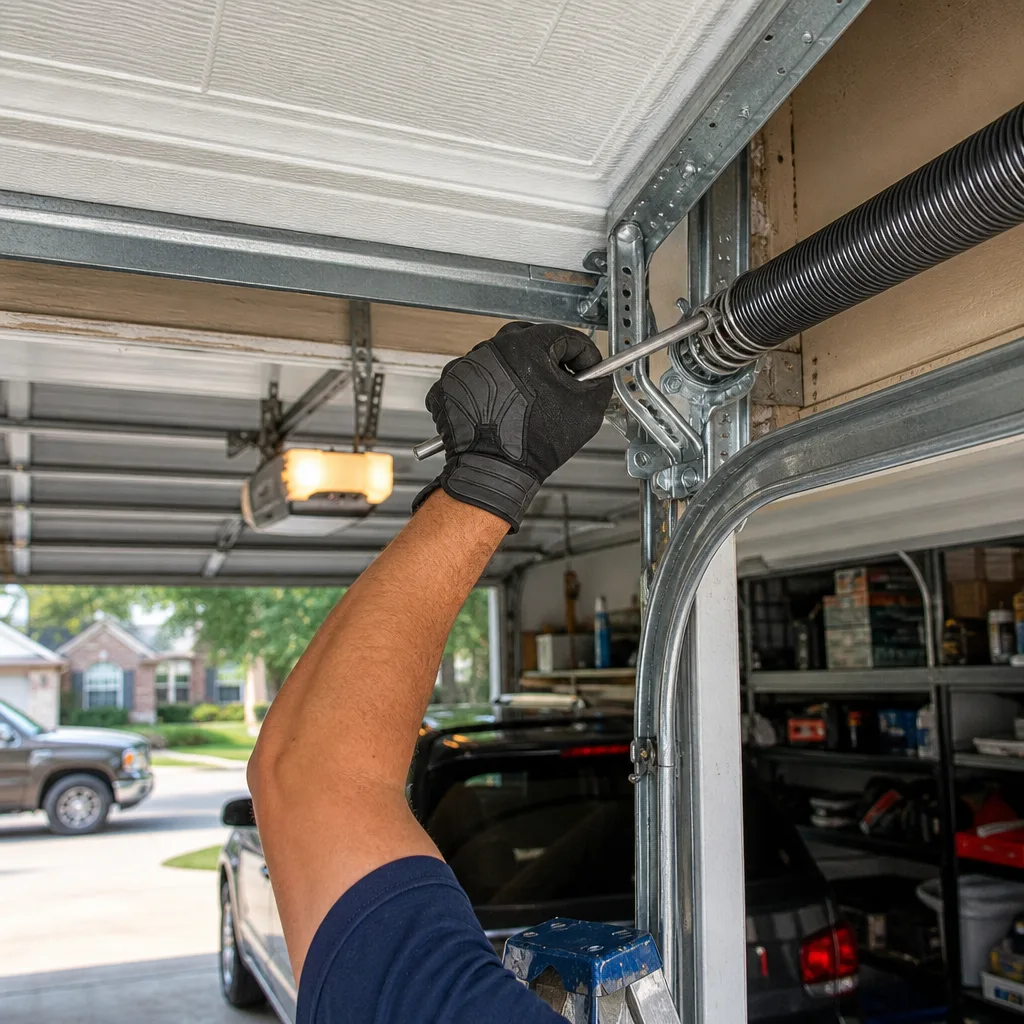
- Test the balance at the halfway point. Lift the door to the midpoint and let go. A properly balanced door stays put. If it falls or climbs, the spring tension is off. This is a job for an experienced garage door repair service in Plano, not a DIY adjustment.
- Look for daylight gaps around the door. Stand inside the garage with the door closed and lights off. Light coming through the sides or top means the weatherstripping has failed over the winter, and your garage is leaking conditioned air.
Spring is also the right time to clean the tracks with a dry rag and wipe down the photo-eye sensors. North Texas spring pollen is brutal, and a dirty sensor eye will make your door refuse to close, reverse for no reason, or beep at you. A damp cloth on the sensor lenses once a month during March and April prevents most false-reversing calls we get.
Summer (May-September): What 100°F Days Do to Torsion Springs
Plano summers are the enemy of torsion springs. Here’s the physics: your torsion springs are rated for cycles, usually 10,000, 20,000, or 30,000 open-and-close operations. Manufacturers test those cycle ratings at room temperature. But the inside of an uninsulated Plano garage in August runs 110 to 130 degrees, and that sustained heat accelerates metal fatigue. A spring that would last eight years in Minneapolis lasts five or six here. When a spring snaps, it sounds like a gunshot. When it happens at 2 a.m. on a July night, the door is sealed shut and you’re not getting the car out until someone replaces the spring.
We count spring cycles the way you count tire miles. During summer months, your door goes through more cycles too. Kids are home. The garage becomes the side entrance for the whole house. You might open and close the door eight or ten times a day in June, which is double the cycles the spring sees in February. That’s why a high percentage of our emergency spring calls in Plano happen between June and August. The spring didn’t fail because it was hot that day. It failed because it was hot for eighty straight days, and the metal finally gave out.
Here’s what to watch for during Plano summers:
- Loud operation. A door that used to be quiet and now clanks or groans is telling you the springs are working harder than they should. Springs don’t get louder as they age unless something is wrong.
- The door feels heavier at the bottom. When springs lose tension, the door’s weight transfers to the opener and to your own back. If lifting the door manually takes real effort, the springs are losing their charge.
- The opener starts and stops mid-cycle. An opener that strains, pauses, or reverses during a hot afternoon is often fighting a heat-weakened spring. The opener isn’t the problem. The spring is.
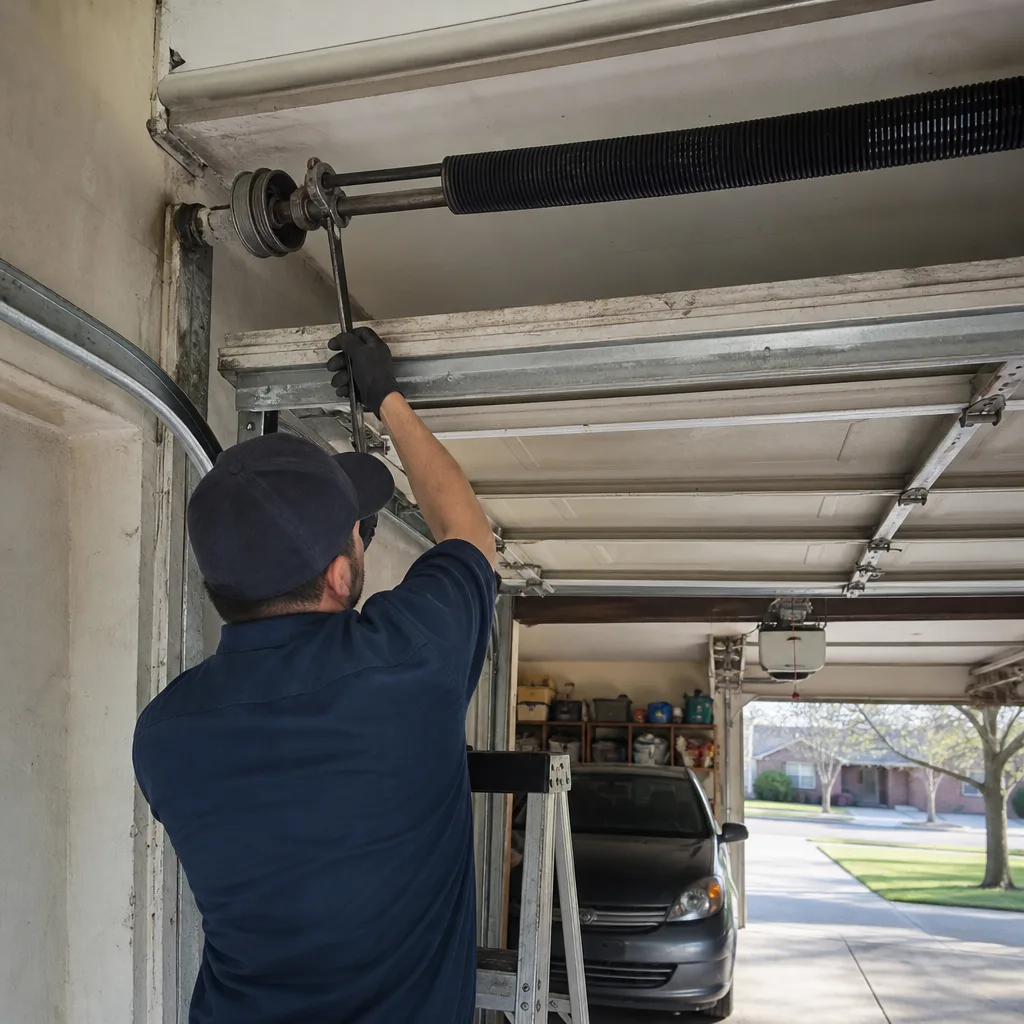
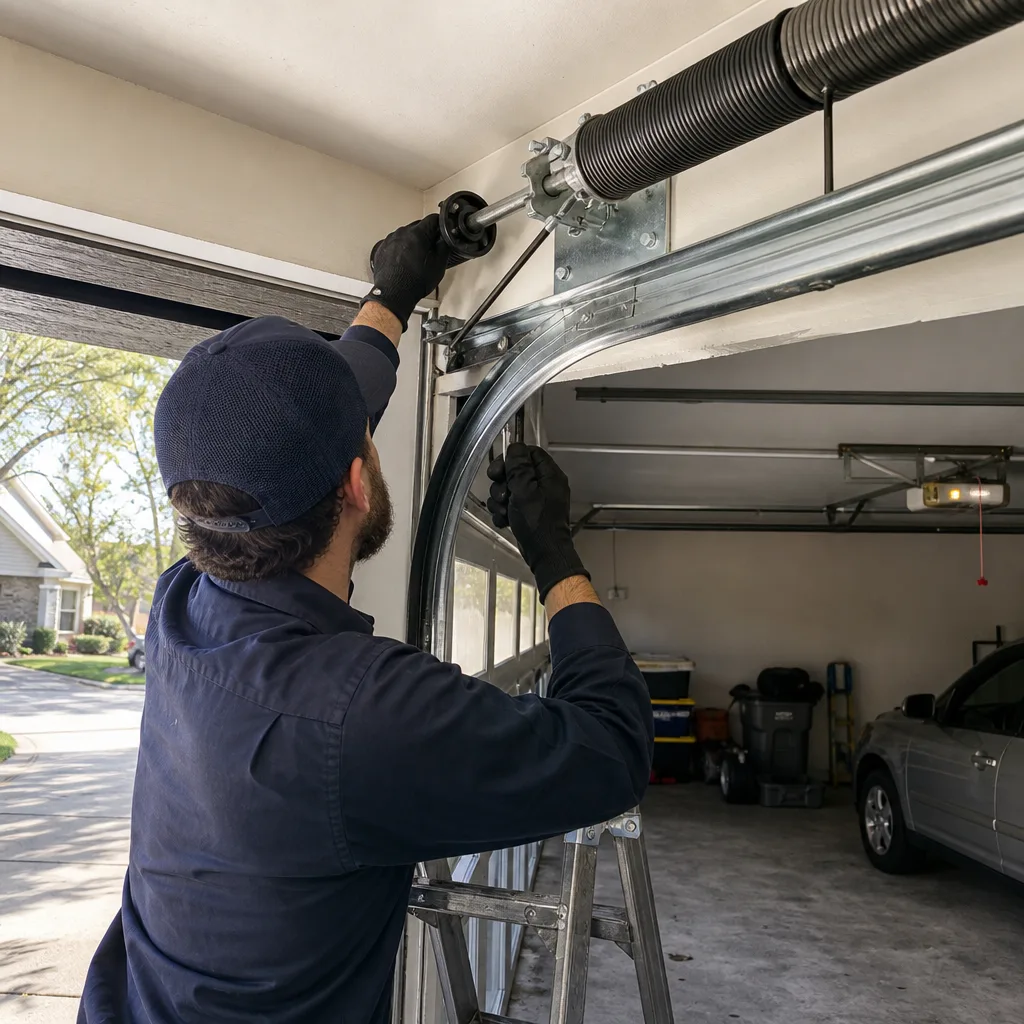
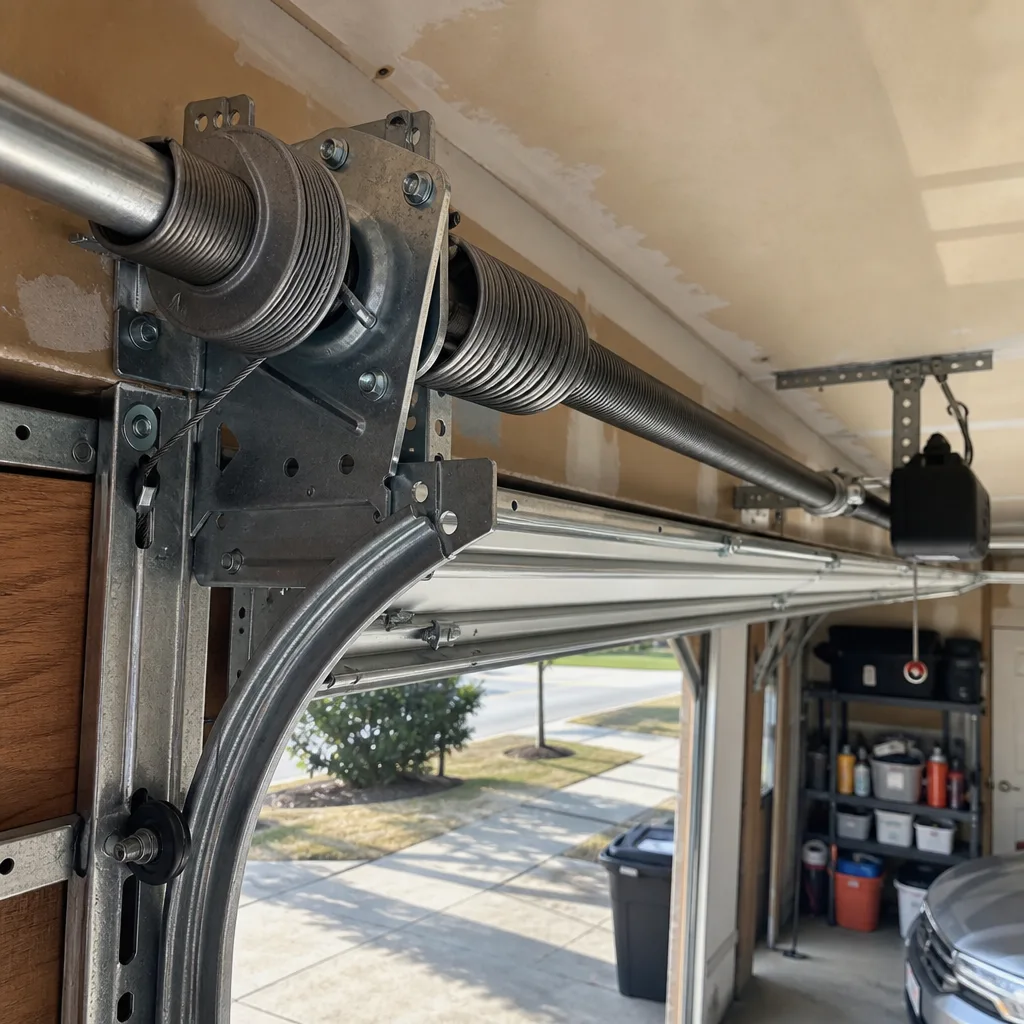
- Visible gaps in the spring coil. On a torsion spring, look for a separation in the coil. A two-inch gap means the spring has broken and needs immediate replacement. Do not operate the door if you see this.
- Squeaking from the spring. A dry spring squeaks. Lubrication helps, but a spring that squeaks heavily after lubrication may be nearing the end of its life.
During summer months, check the balance once a month. It takes thirty seconds. Release the opener, lift the door halfway, let go. If the door moves up or down more than an inch, note it and check again in two weeks. If it’s getting worse, that’s a spring losing tension, and you want it addressed before it snaps in the middle of the night. A garage door weighs 200 pounds or more. You don’t want to be on the wrong side of that.
Fall (October-November): The One Real Lubrication Window in Plano
Fall in Plano is short. You get maybe four to six weeks between the end of 90-degree days and the first freeze warning. That window is the most important maintenance period of the year, because it’s the only time you can lubricate every moving part while the metal is still warm enough to open up and absorb the lubricant. Lubricate in the middle of July and the lubricant thins out and runs off. Lubricate in January and the metal is contracted, so the lubricant sits on the surface and doesn’t penetrate. October and November are the sweet spot.
Here’s the full fall lubrication routine, in order:
- Release the opener and run the door manually through its full travel two or three times. This warms the rollers and hinges slightly.
- Spray the torsion spring with a silicone-based garage door lubricant or white lithium grease. Coat the entire length of the spring. This is the single most important lubrication point.
- Lubricate each hinge at the pivot point where the two halves meet. There are three or four hinges per section on a standard residential door.
- Lubricate the rollers, but only the stem and bearings. Do not lubricate the nylon wheel itself. Nylon rollers don’t need it, and oil on the wheel attracts dust.
- Lubricate the bearing plates at the ends of the torsion tube.
- Run the door through three full cycles to distribute the lubricant evenly.
- Wipe off excess with a rag. Excess lubricant drips onto the floor and attracts grime.
Do not use WD-40 for this job. WD-40 is a water displacer and solvent, not a long-term lubricant. It works fine for freeing a stuck bolt, but it strips the existing lubricant off your door hardware and leaves it drier than before. Use a dedicated garage door lubricant or a spray white lithium grease. A can costs eight to ten dollars at any hardware store in Plano and lasts two years.
Fall is also when we recommend scheduling a professional inspection if you haven’t had one in the past year. A trained eye catches things homeowners miss: hairline cracks in hinges, slight track warping, spring wear that’s hard to see from the ground. At Otto’s Garage Door, we’ve been doing this since 2004, and we’d rather catch a $40 roller replacement in October than do a $500 cable repair in February. Call us at (945) 215-6820 if you want a second set of eyes before winter.
Winter (December-February): Handling Ice Events Without Breaking Your Opener
The number-one month for emergency calls in Plano is February. Not January. Not December. February. The reason isn’t the coldest temperatures of the year. It’s that by February, the hardware has been through a dry summer, a short fall, and one or two freeze-thaw cycles. The lubrication is breaking down. The metal is contracted. And then an ice event hits, and moisture gets into the seams, freezes the bottom seal to the driveway, and suddenly the opener is straining against a door that’s frozen shut. If you hit the opener button and the motor runs but the door doesn’t move, stop. Do not keep pressing the button. You’re forcing the opener’s gears against frozen resistance, and you’ll strip the gear or burn out the motor.
Here’s how to handle a door that won’t open after an ice event in Plano:
- Do not force the opener. Release the opener by pulling the emergency release handle. If the door moves even slightly when you pull it manually, the ice seal at the bottom is the problem.
- Break the ice at the bottom seal. Use a plastic scraper or the handle of a broom. Tap gently along the bottom edge where the seal meets the driveway. Do not use a metal shovel or a pry bar. You’ll tear the seal.
- Spray the seal with a silicone spray or water-based de-icer. Avoid rock salt directly on the seal. Salt degrades the rubber compound and shortens the seal’s life significantly.
- Wait ten minutes, then lift the door manually. It should move freely now. If the door is still stuck, there may be ice in the track or the hinges, and you should call a professional rather than forcing it.
- Once open, inspect the cables and springs. A door that was frozen shut and then forced open sometimes snaps a cable or overstresses a spring. If you see frayed cable or a gap in the spring coil, don’t close the door. Call for service.
Winter is also when we see the most stripped opener gears in Plano. A homeowner hits the opener button three or four times against a frozen door, the motor runs, and the plastic gear inside the opener sacrifices itself. That’s a $150 to $250 repair that could have been avoided by releasing the opener on the first try. If your opener is making a grinding noise after an ice event, the gear is already damaged and will fail soon. Don’t wait for it to strand you with the door half-open. Call us at (945) 215-6820 and we’ll have someone out the same day. We answer the phone 24/7, even at nine at night when the ice has sealed your car inside and you can’t get to work the next morning.
The Bottom Seal: The Five-Minute Task That Prevents Plano’s Most Common Garage Problem
If there’s one task we’d put on every Plano homeowner’s calendar, it’s checking the bottom seal. This is the rubber strip along the bottom edge of the door. It’s the first line of defense against everything North Texas throws at your garage: rainwater during spring storms, heat and dust during summer droughts, cold air and ice during winter events, and pests year-round. A cracked, brittle, or torn seal lets moisture into the garage, which causes rust on the track hardware, warping on wooden doors, and mildew on anything stored on the floor. It also creates a gap that lets heated or cooled air escape, which matters when your garage is attached to the house.
Checking the seal takes five minutes:
- Close the door completely.
- Look for gaps between the seal and the driveway. Even a quarter-inch gap matters. Water follows the smallest channel.
- Press the seal with your thumb. It should flex and spring back. If it’s hard, cracked, or crumbles under light pressure, it’s done.
- Look for tears from the ends. The ends are where seals fail first, because they take the most sun exposure.
- Check the seal’s attachment channel. If the seal is pulling out of the T-shaped channel that holds it, it needs to be re-seated or replaced.
A bottom seal costs $20 to $40 at a hardware store in Plano. Replacing it takes about twenty minutes if you’re comfortable sliding the old seal out and the new one in, and most homeowners can handle it with a utility knife and a little patience. If you’d rather not mess with it, this is one of the least expensive repairs we do. We carry seals on the truck for common door widths, and a replacement typically runs less than most people expect. The bottom seal is the cheapest insurance policy on your garage door, and it fails slowly enough that most homeowners don’t notice until the December rainstorm leaves a puddle across the garage floor.
Common Mistakes to Avoid
- Following a four-equal-seasons maintenance schedule. Plano doesn’t have four equal seasons. A schedule built for the Midwest has you lubricating in April, when our heat is already building, and inspecting in January, when the metal is contracted and hiding problems. Build your schedule around North Texas: inspect in early spring, monitor in summer, lubricate in fall, and prepare for ice in winter.
- Using WD-40 as a garage door lubricant. This is the most common mistake we see. WD-40 strips lubricant and leaves hardware drier than before. Use a silicone spray or white lithium grease made for garage doors.
- Forcing the opener against a frozen or stuck door. Every press of the button against resistance wears the plastic gear inside the opener. Four or five presses can strip the gear completely. Release the opener first, then investigate.
- Ignoring a loud door. A garage door that suddenly gets louder is trying to tell you something specific: a dry spring, a failing roller, a loose hinge, a worn bearing. Noise is a symptom, and symptoms don’t fix themselves.
- DIY spring replacement. Torsion springs are under extreme tension. One wrong move and a spring can seriously injure you. This is not a homeowner repair, no matter how many YouTube videos you’ve watched. A door is 200 pounds riding on two springs. Respect it.
- Replacing the opener when the door is the problem. If the opener is straining, the problem is almost never the opener. It’s usually the springs, a track alignment issue, or a frozen seal. Replacing the opener doesn’t fix the underlying problem, and now you have a new opener working against old, failing components.
- Skipping the annual professional inspection. The average homeowner checks their garage door maybe twice a year. A professional inspection catches wear patterns that are invisible to an untrained eye. The $80 to $120 you spend on an inspection is a lot cheaper than a $400 cable replacement at 2 a.m.
When to Call a Professional
Some garage door problems are genuinely dangerous, and no amount of DIY confidence changes that. Call a professional if you have a snapped torsion spring, a frayed or broken cable, a door that’s off its track, or a door that’s stuck halfway with visible damage to the panels or hardware. Also call if you’ve tried the winter ice clearing steps above and the door still won’t move, or if the door is making grinding, popping, or gunshot-like sounds. Otto’s Garage Door offers free estimates in Plano. We’ve been serving this area since 2004, and Otto himself answers the phone. Call (945) 215-6820 and we’ll tell you what’s wrong, what it costs, and when we can be there. The price we quote on the phone is the price you pay at the door, in writing.
Frequently Asked Questions
Twice a year minimum: once in early spring for inspection and alignment checking, and once in the fall for lubrication and winter preparation. Plano’s heat and seasonal ice events put extra strain on door hardware compared to more temperate parts of Texas. Homes on newer garage door installations in Plano can sometimes get away with annual service for the first two or three years, but after that, twice-yearly checks are the standard we recommend.
For Plano’s specific climate demands, we’ve seen the best long-term performance from Clopay and Amarr steel doors paired with Chamberlain or Genie openers. These brands hold up well to sustained heat and handle the occasional ice event without significant warping. The brand matters less than the installation quality and the maintenance schedule. A well-installed mid-tier door from Amarr will outlast a premium garage door opener system in Plano that’s never been serviced. Call us at (945) 215-6820 if you want a straight answer about what’s worth the money and what isn’t.
Yes, lubricating hinges, rollers, and springs is safe for most homeowners, as long as you use the right product and follow the fall lubrication routine above. Never lubricate the spring while the door is under tension from the opener, and never use WD-40. If you’re not comfortable reaching the spring, or if your door has high-tension extension springs instead of torsion springs, call Otto’s Garage Door and we’ll do it for you. It’s a quick job, and the call is free.
Basic lubrication and inspection service in Plano typically runs $80 to $120 when hired out. DIY lubrication costs about $10 for a can of proper lubricant. More involved work like bottom seal replacement usually runs $60 to $100, and spring replacement costs $180 to $340 depending on the spring’s cycle rating and the door’s weight. Otto’s Garage Door offers free estimates, and we quote the price before starting any work, so you’ll never be surprised at the door. Call (945) 215-6820 for an exact quote.
That bang is usually the bottom seal tearing free from ice that’s bonded it to the driveway. It’s not dangerous by itself, but it does damage the seal over time and can stress the opener. The proper fix is to break the ice seal gently before opening, using a plastic scraper and silicone spray as described above. If the bang is accompanied by visible shaking or if it happens after the seal is already free, call us at (945) 215-6820 and we’ll check the springs and tracks.
The rule of thumb is this: if the door itself is more than fifteen years old and the springs have been replaced twice, the door is approaching the end of its useful life. If the panels are rusted, warped, or dented, the door’s insulation value is already compromised. In Plano, where the summer heat pushes an uninsulated garage to 120 degrees, an old door is costing you money in cooling costs every single day. Otto’s Garage Door home service area includes all of Plano, and we’ll give you an honest assessment on whether to repair or replace, not a sales pitch. A new door typically pays for itself in energy savings and reduced maintenance within five to seven years.
The Bottom Line
Your garage door in Plano needs more attention than a garage door in Ohio, and the schedule looks different. Inspect in March and April before the heat hides alignment problems. Monitor spring tension during the long summer, because heat kills springs faster than cold ever will. Lubricate everything in October and November, the only window where the metal is warm enough to accept lubricant and cool enough to hold it. And in winter, respect the ice. Release the opener before forcing anything, break the ice seal gently, and never, ever adjust springs or cables yourself. Five minutes a month and two professional checks a year will keep your door running for decades instead of years. If you ever have a question, explore our more guides & resources or call us at (945) 215-6820. Otto answers the phone, and he’ll tell you straight what’s wrong and what it costs.
Written by Otto Reinhardt, Owner at Otto’s Garage Door, serving Plano since 2004.